



Deck and Wood Stains
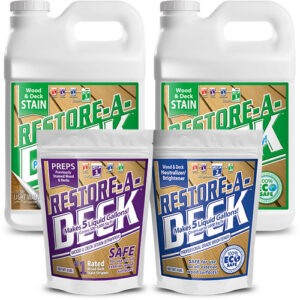
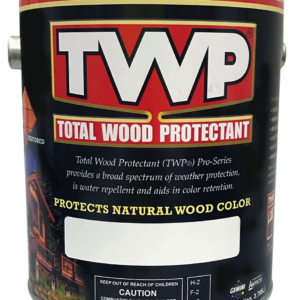
We stock the deck stains we use and test ourselves: Restore-A-Deck, TWP and Armstrong-Clark. Each one penetrates and protects decks, fences, siding and log homes. Choose by how much wood grain you want to show, how much UV protection you need and what’s already on the wood.
Semi-Transparent vs. Solid Stain
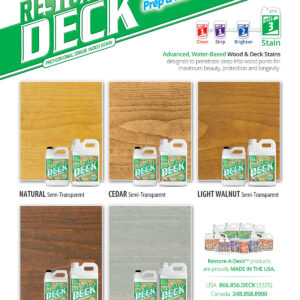
- Semi-Transparent: Adds color while the grain still shows. It penetrates instead of forming a film, so it won’t peel and recoats easily. This is the best choice for most decks.
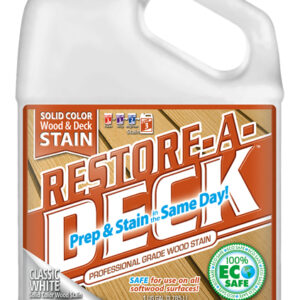
- Solid: Covers the grain like paint while letting the wood texture show. A good choice for older, weathered wood or for covering a previous stain color.
More pigment means better UV protection. Darker, richer colors hold up longest against sun fading.
Our Stain Brands
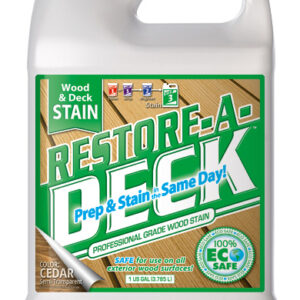
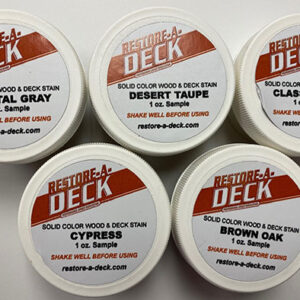
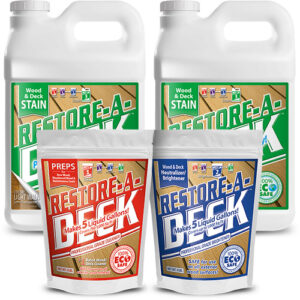
- Restore-A-Deck Stain: Our own semi-transparent and solid stains, made to pair with RAD Cleaner and Brightener kits.
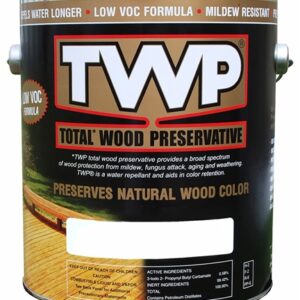
- TWP Stains: Penetrating oil-based stains. TWP 100 Pro and TWP 1500 are proven on pressure-treated pine, cedar and redwood.
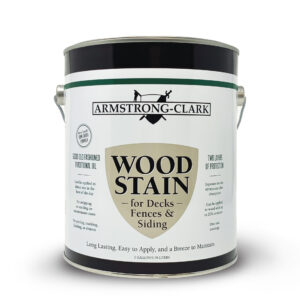
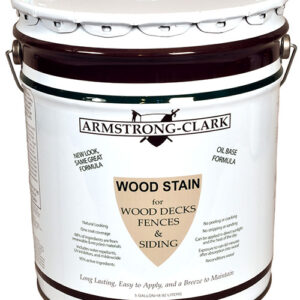
- Armstrong-Clark: Oil-based stain with drying and non-drying oils that condition the wood and protect the surface in one application.
Not Sure Which Color?
Wood species, age and prep all change the final color. Order stain samples and test them on your own wood before you buy gallons. Use our Stain Calculator to estimate how much you need.
Prep Matters
Stain only performs as well as the prep under it. Clean and brighten the wood first, or strip it if an old finish is still on. Our stain combo kits bundle stain with the right Cleaner/Brightener or Stripper/Brightener at a discount.
Frequently Asked Questions
Can I put a semi-transparent stain over a solid stain?
No. A semi-transparent stain can’t penetrate through a solid stain. Strip the old finish completely or stay with a solid color.
How long does deck stain last?
Deck floors typically need a maintenance coat every 2–3 years. Vertical surfaces last longer. Results depend on sun exposure, color and prep.
Do I need to wait to stain a new deck?
Most new pressure-treated wood needs to weather and dry before staining. Check the stain’s label for its specific wait time.